#SOHA2020 Plenary: Nevada Native Artists Speak on Oral History and Art

Join us for the #SOHA2020 virtual conference, which includes a plenary session on September 11 at 2:50 pm Pacific Time featuring Nevada Native artists Jean LaMarr and Jack Malotte with Fawn Douglas as the moderator.

Register and learn more at https://www.southwestoralhistory.org/conference.html.

KNPR segment that aired on September 11, 2020:

https://knpr.org/knpr/2020-09/oral-history-teaches-how-navigate-present.

This panel is a conversation between accomplished Native American activist artists about the role of oral history in their work. Both Jean LaMarr (Northern Paiute and Achomawi) and Jack Malotte (Western Shoshone and Washoe) have worked in multiple media, including printmaking, painting, pen and ink, and public murals, and they have been lifelong activists in service of their communities. Among the themes their art engages with are militarization, Native activism, treaty rights, environmental justice, kinship and tradition, and protecting sacred sites. In this conversation, Southern Paiute artist Fawn Douglas talks with both LaMarr and Malotte about the role and importance of oral history in Native communities in Nevada and beyond, and how they have drawn on it in their art and their activism.

Suzi Resnik Makes Donation to SOHA in Honor of Tensia Moriel Trejo and Rob Ray

Dr. Suzi Resnik, the 2017 SOHA Mink Award recipient, has recently made a generous donation to SOHA in honor of Rob Ray and Tensia Trejo. SOHA thanks Suzi and celebrates oral historians Rob and Tensia in our SOHA 2020 Virtual Conference Program

Continue reading “Suzi Resnik Makes Donation to SOHA in Honor of Tensia Moriel Trejo and Rob Ray”

SOHA 2020 Keynote with Dr. Alex Aviรฑa

Join the #SOHA2020 Virtual Conference to attend the keynote talk with Dr. Alex Aviรฑa. His talk, “Killing Machine: How Mexican and U.S. States of Exception Turned Revolutionaries and Migrants into Bare Life, 1969-1996,” will be held via Zoom on Saturday, September 12 from 1:50 pm to 2:50 pm Pacific Time. Thanks to our co-sponsors UNLV Department of History and UNLV Department of Interdisciplinary, Gender, and Ethnic Studies in the College of Liberal Arts.

Dr. Alexander Aviรฑa is an associate professor of history and director of Undergraduate Studies for the School of Historical, Philosophical and Religious Studies at Arizona State University. Dr. Aviรฑa is an academic expert in how the foundations of colonialism, indigenous genocide, empire building, guerilla movements, and configurations of violence have greatly influenced North American histories. Much of his previous work has focused on the oral histories of peasant guerilla, counterinsurgency, and social justice movements in working class and rural Mexico.

His current work interests are documenting the firsthand accounts of the political and socioeconomic factors in Mexican drug wars and state violence in 1960โ€™s and 1970โ€™s. He is also well qualified to discuss Central and South American migrations, political movements, inclusive historical pedagogies, and public/private memories of violence and war. He is an excellent plenary speaker and addition to any conference panel given his broad areas of expertise, oral history experiences and work, interdisciplinary appeal, and personal migration background. His work and insights have been sought by CNN, PBS, Arizona News, various historical podcasts, KJZZ and his book Specters of Revolution was awarded the Marรญa Elena Martรญnez Mexican History Book Prize in 2014.

Learn more about the conference and register at https://www.southwestoralhistory.org/conference.html.

SOHA 2020 Conference Program

SOHA 2020 Program

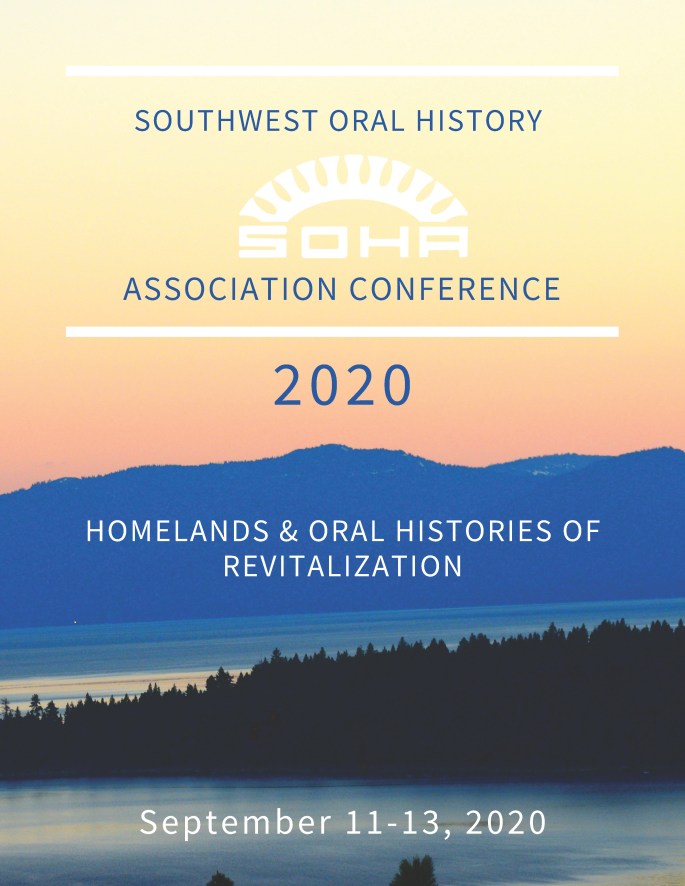
We excited to share our 2020 conference program! Join us September 11-13, 2020 via Zoom. You can pre-register here. Some programs have been moved to October such as our introduction to oral history workshop and a documentary screening with the director. More information will be provided at the conference for future events. Please contact the conference co-chairs atย soha2020conf@gmail.comย with any questions.

We are offering the conference at no-cost/donation basis to students and members with a nominal cost to non-members. We hope you will help sustain our 501c3 non-profit by renewing/joining our membership or fund our programs,ย bit.ly/supportSOHA.ย We will have a keynote address, plenary sessions, and an award ceremony in which we will acknowledge our 2020 Mink awardee, Professor William (Willy) Bauer, 2020 Lifetime Awardee, Professor Caryll Dziedziak, mini-grant, and scholarship recipients. Our Zoom platform will continue the mentorship program with our network of practitioners. We will archive portions of the conference and offer them on our website as a resource.

Follow updates on our social media accounts with #SOHA2020 and share your sessions online to promote attendance. Visit sohanews.wordpress.com/conference for additional details.

Oral History Happy Hour

SPOH Hosting Monthly Virtual Happy Hours

Grab your favorite festive treat and join us on the first Thursday of every month for a virtual conversation about Oral History in the COVID19 Era.

See below our schedule:

Thursday, September 3rd, 4pm Pacific
Oral History and Storytelling
Click to Register
What are the overlaps between oral history and storytelling? How can the two fields work together to benefit our research and collective memories? Join us to discuss the relationship between oral history and storytelling.

Special Guest: Liz Warren
Executive Director: Storytelling Institute

Thursday, October 1st, 4pm Pacific
Letโ€™s Talk about Tech
Click to Register
What kinds of technology are you using to conduct remote interviews? What lessons have you learned? Be a part of the conversation!

Special Guest: Jennifer Keil
Founder, 70 Degrees
https://70degrees.org

Thursday, November 5th, 4pm Pacific
COVID19 Collections
Click to Register
Are you doing work on COVID19? Call in for a conversation about launching and analyzing COVID19 stories. Please bring your own ideas to share with all of us.

Special Guest: Farina King, PhD
Citizen of Navajo Nation
Assistant Professor, Northeastern State University

Thursday, December 3rd, 4pm Pacific
Ethics and Consent with Remote Interviewing
There is a lot to consider when it comes to consent, and ethical practices of conducting oral history. COVID19 has exacerbated these concerns. Join us for a dialogue about navigating our new challenges in oral history.
Special Guest: TBD

Remote Interviewing Webinar Follow-up

Greetings!

It’s been a couple of weeks since we all gathered for SOHA’s roundtable on Remote Interviewing in the COVID19 Era. Caryll and I want to thank you again for contributing and talking with us about your interests and experiences. If you have feedback for us about your experiences, please send your thoughts and suggestions my way.

I’ve attached the slides from our presentation, since many of you indicated they were blurry. Please make special note of how you might get in contact with SOHA. We’d love to have you join our organization or participate in our virtual conference next month.

Please also feel free to get in touch with Caryll or me with questions, thoughts or comments! We are delighted by the camaraderieย and collaboration!

Caryll Batt Dziedziakย web: https://www.unlv.edu/wrin

Summer Cherland web: southphoenixoralhistory.com; @smcchistory; podcast: โ€œMore and More Every Dayโ€ https://www.buzzsprout.com/961189 (and on iTunes/Spotify)


Finally, beginning on September 3rd, The South Phoenix Oral History Project will be hosting a monthlyย virtual “happy hour/cafe” for oral historians. We invite you to call in to talk about a monthly topic with a special guest. Click here for the schedule and to register.

All the best,

Summer

Summer Cherland, PhD

South Mountain Community College

MARICOPA COMMUNITY COLLEGES

Residential Faculty | History

7050 S. 24th Street, Phoenix, AZ 85042

summer.cherland@southmountaincc.edu

http://www.southmountaincc.edu/

https://southphoenixoralhistory.com/

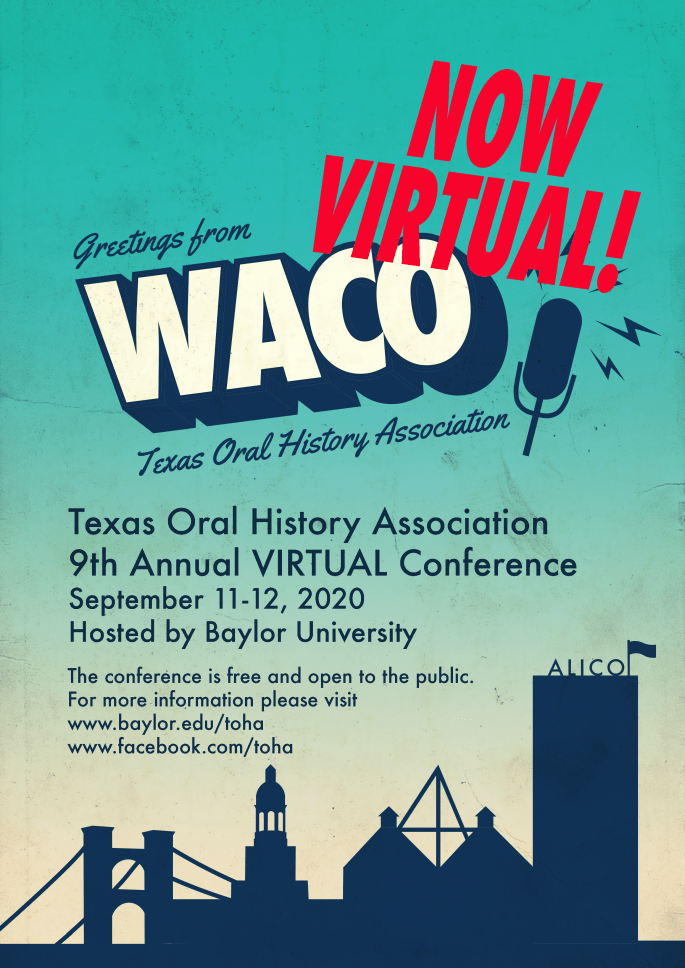
Texas Oral History Association 2020 Conference

Friday, Sept 11, 2020 from 2-5pm

Pre Conference Workshop โ€“ โ€œMuseo del Westside : A Community-Based Oral History Projectโ€

This year’s workshop will be led by Sarah Zenaida Gould, PhD, Interim Executive Director of the Mexican American Civil Rights Institute in San Antonio. Her workshop will demonstrate how to use oral history for community-based history, storytelling, and social justice projects.

Participants will learn about essential steps, best practices, digitization strategies, and increasing public engagement in heritage conservation through oral history projects. The workshop will emphasize the importance of community trust and shared authority as well as offer examples of how oral history projects can connect to campaigns for social justice while preserving memory, ritual, and identity.

The workshop is open to all, whether attending the conference or not. To participate in this workshop, select the workshop option during registration. We understand that COVID-19 has had an impact on many individuals financially. Therefore instead of a workshop fee, we are accepting โ€œpay what you canโ€ donations to aid paying our workshop speaker as well as support the operations of TOHA. Any donation of $15 or more will apply towards a year of TOHA membership.

Friday, September 11, 6-8pm

Friday Night โ€œMeet โ€˜n Greetโ€ Movie Night | Impact : The San Antonio Jewish Oral History Project

Join us for an exclusive documentary screen of Impact : The San Antonio Jewish Oral History Project followed by Q&A by the creators. This award-winning documentary is about the impact Jewish people had on San Antonio over the past century and is based on interviews with the men and women who have made a difference in San Antonio.

Please visit www.baylor.edu/toha/2020conferenceย for latest information.


UC Berkeley Webinar

The Oral History Center is hosting a Remote Interviewing Webinar:

From The Oral History Center at UC Berkeley: http://ucblib.link/OHC

This is a recording of a webinar given by historian Paul Burnett on how to record oral history interviews using Zoom. Paul provides an overview of the protocols that were developed to facilitate remote recording of narrators of the highest quality available during the COVID-19 pandemic. We developed these protocols for the Zoom video conference platform using both audio and video. We also provide instructions for additional, higher-quality backup audio recordings. Interviewers will benefit from having access to a professional Zoom license, but they can produce good recordings with a free account as well. Narrators only need access to a computer or telephone, although a smartphone app will aid in the capture of better audio on their end.

For the closed-captioned version of this webinar, please see this video: https://youtu.be/aIidnLhWMvk