PROCESSING OF ORAL HISTORIES

October 17, 2017

AMIA CONTINUING EDUCATION: PROCESSING OF ORAL HISTORIES

COURSE

1:00pm – 2:30pm
$75
Registration deadline: October 16, 2017
Maximum class size: 50
Instructor: Mary Larson, Associate Dean for Special Collections, Oklahoma State University Library, and Sarah Milligan, Associate Professor and Head of the Oklahoma Oral History Research Program, Oklahoma State University 
Location: Live Webinar

Oral histories, which are nearly ubiquitous in archival and cultural heritage collections, capture first-hand accounts of their subjects and are particularly valuable resources as they often record the histories and memories of underrepresented people and groups. However, oral history interviews may be maintained on a variety of media formats (both analog and digital), which can make them daunting to care for. This 90-minute webinar will offer guidance to those archivists charged with maintaining these important recordings and will present a workflow—from beginning to end—for how best to process, preserve, and make accessible oral history materials. The webinar will also introduce some important concepts that are particular to oral history collections, including conversations on ethical considerations, the use of outside vendors, and the role of transcription and index tagging. This is a beginner-level webinar and previous experience processing oral history and/or audiovisual collections is not required. The course will be taught by Mary Larson, Associate Dean for Special Collections at Oklahoma State University Library and former President of the Oral History Association and Sarah Milligan Associate Professor and Head of the Oklahoma Oral History Research Program at Oklahoma State University. 

REGISTER NOW        

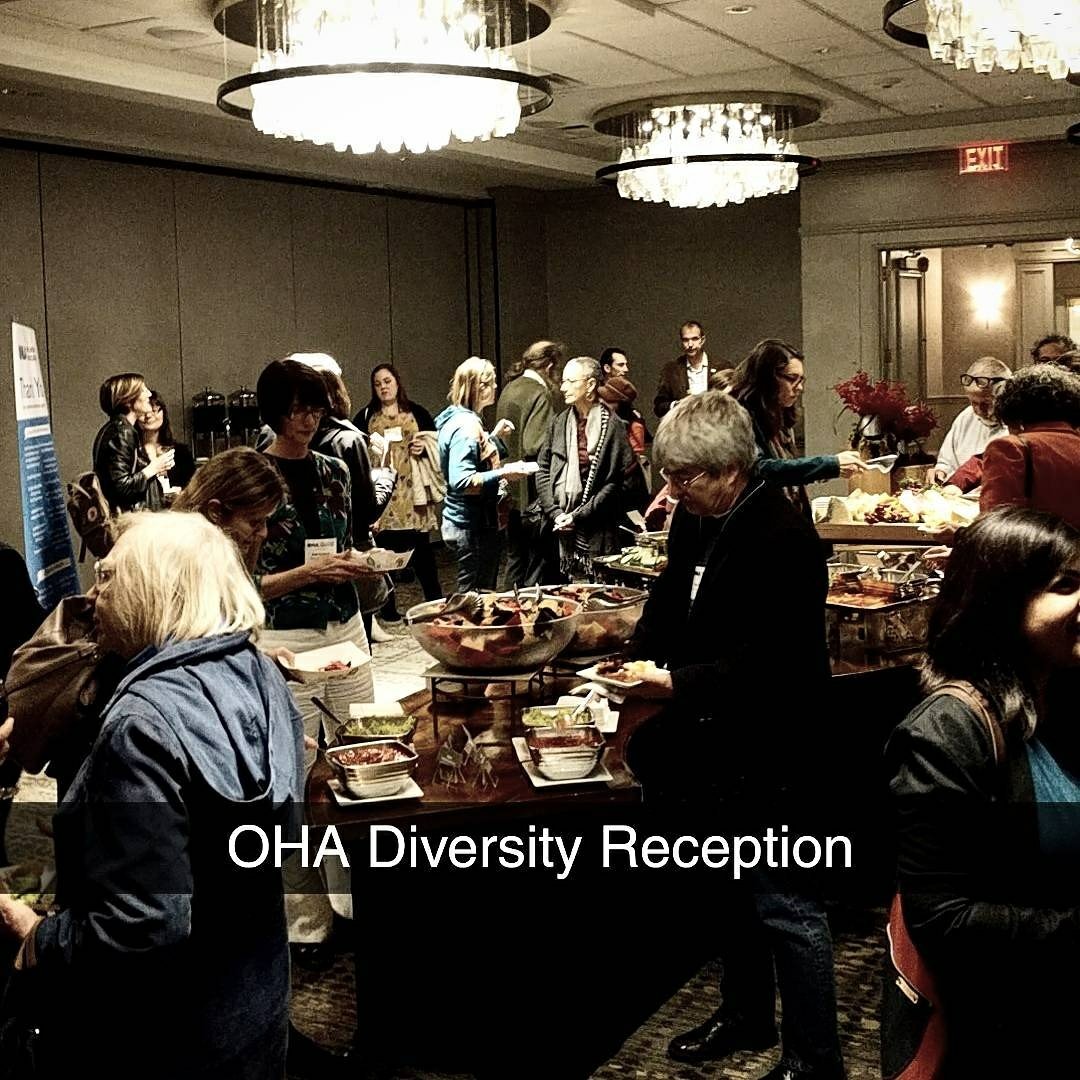
OHA 2017

Look for Southwest Oral History Association board members at the 2017 OHA Conference in Minneapolis, MN! Visit our site, www.southwestoralhistory.org/officers.html, to see who they are and read their bios.

#Repost from @notcarloslopez, SOHA’s AZ Delegate, shared that
“All the movers and shakers in the oral history world gathered in one place.” #OHA2017 #Minneapolis #oralhistory

#Repost from @kingfarina, SOHA’s 2nd VP, with Ma-Nee Chacaby and Chelsea Mead at #OHA2017

Working class narratives in the twenty first century

Today our SOHA Flashback Friday is from The Oral History Review article by our California Delegate, Virginia Espino.

https://blog.oup.com/2017/09/working-class-in-the-21st-century/

With school getting back in session, today on the blog we are exploring how instructors are using oral history in the classroom. The piece below, from filmmaker and UCLA Lecturer Virginia Espino explores the power of oral history to connect students to their campus community, and to help them collaboratively rethink what working class identity means in the modern era.

What does it mean to be a member of the working class in the twenty first century? I posed this question to my students earlier this year when I taught a class in oral history methods for the Institute for Research on Labor and Employment at UCLA. I focused the course on the study and collection of working class stories as a way to uplift voices not often heard in an academic setting and to develop an archive of interviews that broadens our understanding of the working class as a diverse and multifaceted cross-section of our society.

On the first day of class I handed out index cards to each student and asked them to define working class in three words or statements. How we define terms such as “working class,” “middle class” and “upper class” exposes our belief system as well as how successful the media has been in constructing meanings for us. In order to teach working class history, I wanted to understand what the term meant to modern college students in one of the most ethnically and economically diverse cities in the country.

Photo courtesy of Virginia Espino.

The responses were what I might have predicted because they were views that I shared myself:  Living paycheck-to-paycheck; struggling to survive; exploited. But as I re-read through my student’s definitions, I was reminded of my own oral history interviews with the Chicana activist, Lilia Aceves She recalled that poverty meant something different to her growing up in 1940s East Los Angeles. She had a roof over her head and food on the table and imagined herself as well to do. “I didn’t know we were poor…I thought we had everything,” she recalled. Only as an adult did she understand that her family lacked the kind of material wealth one saw in popular magazines or on the big screen. “We always had a home, but in terms of the physical aspect of it you could see that we were the working poor.”

After the first session of class my primary teaching goal for the quarter evolved into using oral history methods to document the meaning working class individuals gave to their lives. I directed my students to enter the interviews with an open mind and to expect to have their assumptions challenged. In addition to capturing the life-history narrative I wanted them to focus on questions that explored how members of the working class understood their social and economic position. Did they view themselves as we did: poor, unskilled, and uneducated? What would they tell us about their lives if we took the time to listen? The results of their interviews were stunning, and several narratives stand out for how they help us to amplify our perception of U.S. “workers.”

Three students in the class chose to work together on an interview project that would explore the lives of three janitors in the University of California system. They developed an interview outline that would focus on the following research questions:

  • What is class-consciousness?
  • How is class structured in the United States?
  • What are the intersections between class and ethnic identity, and do these intersections influence narrators’ lived experiences?
  • What are the opportunities for, and barriers to, upward mobility?
  • What role does unionism and labor organizing take among UC janitors?

Each student was required to interview the same person twice in order to gain an authentic experience of the work oral historians do when approaching the life history. Returning to an interviewee for follow-up questions is the crux of a quality interview and often leads to a deeper dig into meaning and personal agency.  And for the student interviewers, it proved essential in providing them with ample time to develop trust as well as time to step back from the process for self-reflection and self-critique. The students identify as members of the working class, but soon realized they were bringing their own biases to the interview process – specifically, the assumptions they had about the people those who maintain the infrastructure of UC campuses. As stated in their project evaluation, they began their project with the belief that “janitors are poor and their job has low value…” They ended their project with a new awareness that janitors take pride in their work and want to be seen and appreciated by the students, faculty and staff who work alongside them.

As a class we learned the varied meanings of working class through the projects students executed. In a surprising revelation, the students learned that one of the janitors they interviewed held a college degree: Unable to find a job in her field she was force to take a position cleaning the UCLA campus to support her young family. Over the course of the quarter we were introduced to an Asian American student struggling to balance work and school. Her narrative forced us to reject the “model minority” stereotype that presumes Asian Americans float easily through school; her identification with the working class stemmed from her need to support herself through school, while many of her classmates receive unlimited parental support. And through an interview with a white male, we learned that the absence of jobs in the humanities has forced white college educated men to seek jobs in restaurants and department stores while struggling to maintain the lifestyle they desire. Taken together, these important narratives help us complicate what it means to be working class in the twenty first century.

Featured image: UCLA’s Inverted Fountain by Andrew “FastLizard4” Adam. CC BY-SA 2.0 via Flickr.

Virginia Espino is a historian turned filmmaker who currently teaches oral history, Chicanx history, and Labor history at UCLA. She is a co-producer of the film No Más Bebés that examines the history of forced sterilizations at a large public hospital. Her current project is an investigation into the foster care system through the voices of those who encounter it on a daily basis.

SOHA Awards, Scholarships & Mini-Grant Applications

(L-R) SOHA president Marcia Gallo, General Scholarship winner Richard Ly, Eva Tulene-Watt awardees Rachael Cassidy and Diana (Midge) Dellinger, and SOHA officer Farina King
(L-R) SOHA president Marcia Gallo, General Scholarship winner Richard Ly, Eva Tulene-Watt awardees Rachael Cassidy and Diana (Midge) Dellinger, and SOHA officer Farina King 
Suzi Resnik celebrates with members of her family at the 2017 SOHA Awards Luncheon.
Suzi Resnik celebrates with members of her family at the 2017 SOHA Awards Luncheon. 

Eva Tulene Watt Scholarship for Native American Scholars:
Named in honor of Apache author and oral historian Eva Tulene Watt, who shared the story of her family and her people’s past through recounted events, biographical sketches, and cultural descriptions (Don’t Let the Sun Step Over You: A White Mountain Apache Family Life, 1860-1975, with Keith Basso, University of Arizona, 2004), this SOHA scholarship enables indigenous oral history practitioners to attend and participate in the Annual SOHA Conference. As part of the award, the SOHA conference registration fee is waived and travel and hotel expenses are reimbursed up to an amount of $500. Recipients are not eligible for the Eva Tulene Watt scholarship two years in a row. 
2018 Eva Tulene Watt Scholarship Application

General Scholarship:
SOHA awards two General Scholarships to oral historians and practitioners to attend and participate in the Annual SOHA Conference. Students, teachers, independent oral historians and individuals associated with nonprofit organizations in the general SOHA region are encouraged to apply. Funding includes one cash award of $300 per recipient and should be applied toward travel and hotel expenses. The SOHA conference registration fee is waived. Recipients are not eligible for the General Scholarship two years in a row. 
2018 General Scholarship Application

Mini-Grants
SOHA awards up to three mini-grants each year totaling up to $1500. Funds may be used for interviewing, equipment, transcription, editing, publishing, and other oral history related expenses. Students, teachers, and independent researchers, historical societies, archives, museums, and non-profits in the general SOHA region are encouraged to apply to conduct research on the Southwest. Recipients may be invited to present their work at a SOHA conference within two years of receiving the Award. We also ask that recipients prepare a written report on their work for inclusion in SOHA’s newsletter within six months of receiving the award.
2018 Mini-Grant Application


Visit http://www.southwestoralhistory.org/awards.html for more details.

2018 Call for Proposals

The Southwest Oral History Association is excited to announce our 2018 Call for Proposals. This year’s theme is, “Elevating Voices: Oral Histories of Resilience and Unity.” The Call for Presentations Deadline: November 20, 2017. The SOHA Annual Conference will take place APRIL 27-29, 2018 at the Marriott Fullerton and California State University, Fullerton. Please visit southwestoralhistoryassociation.org for more details.

Denial: Holocaust History on Trial, Dr. Deborah Lipstadt Lecture

Attend tonight’s lecture in Orange, CA at Chpman Univeristy.

Denial: Holocaust History on Trial

Dr. Deborah Lipstadt Lecture


Thursday, September 14, 2017

7:00pm – 8:30pm

Add to Calendar

FREE

Free to attend

LOCATION

FIC CHAPEL

Wallace All Faiths Chapel

OPEN TO

General Public

Everyone is welcome to attend

Hosted By

P5lo19uykkcxbyzausec

Rodgers Center For Holocaust Education


Categories


Art Exhibition


Years before the invention of the phrase “alternative facts,” historian Deborah Lipstadt found herself in a London court room compelled not only to defend herself against an allegation of libel but to defend the very truth of history itself. The verdict delivered by the judge ten weeks later was a resounding victory for Lipstadt and a huge defeat for the plaintiff, Holocaust denier David Irving. The Times (London) reported “history has had its day in court and scored a crushing victory.”

Professor Lipstadt is the author of numerous books, including most recently The Eichmann Trial (Schocken/Nextbook, 2011) and Holocaust: An American Understanding(Rutgers, 2016). Appointed by President Bill Clinton, Dr. Lipstadt served two terms on the United States Holocaust Memorial Museum Council. From 1996 through 1999, she was a member of the United States State Department Advisory Committee for Religious Freedom Abroad. Dr. Lipstadt is currently at work on a new book, The Antisemitic Delusion: Letters to a Concerned Student, scheduled for publication in 2018.

Book signing of History on Trial and Holocaust: An American Understanding will follow the lecture.


Recorder of Las Vegas’ oral histories has own tale to tell

https://www.reviewjournal.com/life/recorder-of-las-vegas-oral-histories-has-own-tale-to-tell/

September 5, 2017 – 10:08 am


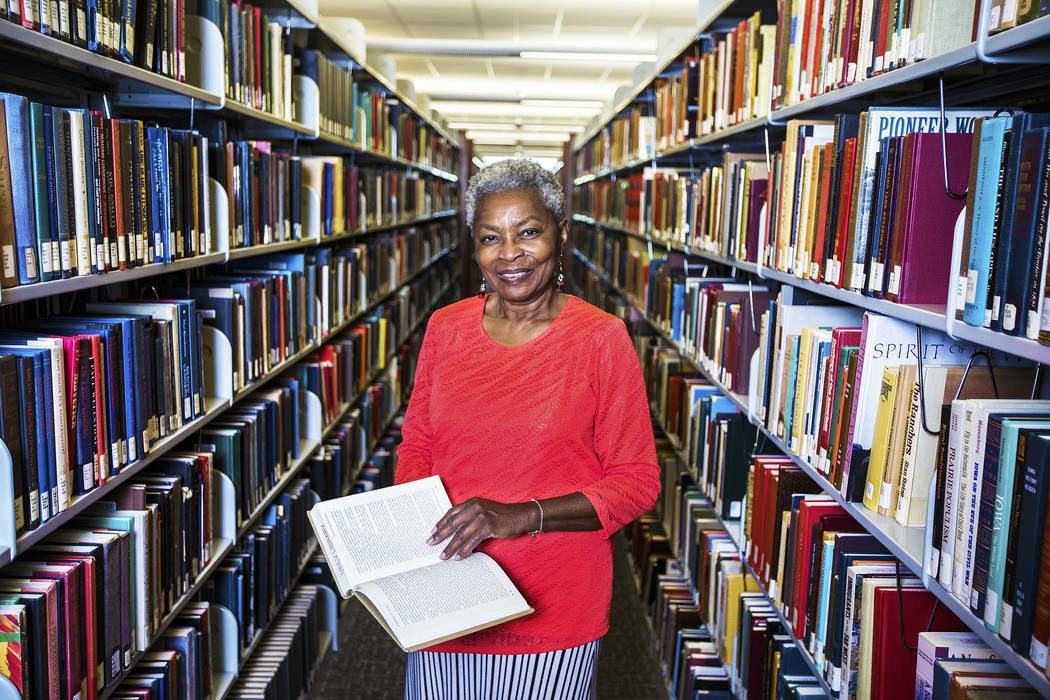
For 14 years, Claytee D. White has been recording the histories of longtime Southern Nevadans as director of the Oral History Research Center at UNLV Libraries.

But White has experienced some history of her own, too, as a sharecropper’s daughter growing up in the South, as a black woman who didn’t attend school with white classmates until college, and as someone who continues to view firsthand the progress, or lack of it, in race relations in the United States.

White was born in Ahoskie, North Carolina, at a time when racial segregation was a given.

“I grew up completely segregated,” she says. “You’d encounter (white neighbors), because in my family’s case we worked on a farm owned by a white person, so you interacted with the family to a very limited degree. And on Saturdays we’d all go to town, so we’d drive into Ahoskie to do grocery shopping, and that’s where you’d see other (white neighbors).

“Even when we had white kids in the neighborhood — I remember at one point we had white neighbors — we’d play with those kids in that family, but once school started, you didn’t go to the same school even though you lived across the street from one another.”

She attended college at North Carolina Central University for two years, “but, still, even with the grants and loans they provided at the time, my parents still could not do that.”

So, White moved to Washington, D.C., for two years, and then to Los Angeles, where she returned to school and earned a bachelor’s degree in sociology. She came to Las Vegas in 1992 to study at UNLV, and began taking oral histories while a UNLV student.

After earning a master’s degree here, White moved to Virginia to work on her doctorate, then returned to North Carolina to care for her mother. She returned to Las Vegas in 2003 to become charter director of UNLV’s oral history program.

White estimates that the program so far has conducted about 4,000 interviews, which are then transcribed, edited, corrected and archived in the library’s archives for use by students and researchers.

“We’ve done all kinds of projects,” she says. “We’ve done early health care in Las Vegas, so we interviewed doctors and nurses and hospital administrators. We’ve done dancers and showgirls.


“Our very first project is called ‘Early Las Vegas.’ That’s our open-ended project. So in that project, we’ve interviewed dancers and showgirls and attorneys. You name the profession and we’ve interviewed them for that project.”

Review-Journal: What was it like growing up in the South?

White: I grew up on a farm. We grew tobacco and cotton and corn and peanuts. We were sharecroppers. We didn’t have much money, so we actually lived on someone else’s farm and used their equipment and their farm animals, and at the end of the year you would split the (net) profits after all the bills were paid.

Looking back, how did your experiences then affect you?

Usually, people say today, ‘Oh, but we never knew we were poor.’ I knew we were poor, so I don’t know how they didn’t know (laughs). So what I always knew is I never wanted to be poor again. So my goal from the very beginning was to leave Ahoskie as quickly as I possibly could.

You didn’t attend school with white classmates until college. How did growing up in a segregated community affect your view of the world?

I probably see things as more black and white than most people. That’s one way to say it (laughs). I probably see more inequality and injustice in a situation than probably is even there sometimes. But I’m seeing it through a lens, through that kind of background. When you are not included, it means you’re not included in the jobs. Your education is not the same.

Was education valued in your family?

Of course, my mom wanted everybody to go to college, but my father just could not see the possibility in doing that. They just wanted everybody to get a high school diploma. Then you could get a job, you could move to New York or Delaware. My father’s family moved to Delaware, and my mother’s to upstate New York, and we have some relatives in Virginia, the Newport News area of Virginia. Those places they saw as prime places to migrate.

Who is the most intriguing person you’ve interviewed on behalf of the oral history program?

The first person I interviewed was one of the most intriguing, Darrell Luce. When he was a young boy, 5 years of age in the late 1920s … his father opened a very small (store) in Boulder City so he could sell things like toasters. As a young boy, Darrell Luce watched the dam being constructed and he was just fascinated with it. During World War II, he went off to fight in the war, and when he came back to Las Vegas, he was one of the soldiers who was put in trenches at the Nevada Test Site in the ‘50s so they could test radiation. … It was just fascinating to talk with him. His memories were so vivid.

Have any themes emerged in the interviews — about Las Vegas or, maybe, just being a Las Vegan?

A few of those might be migration themes and themes about work and how important work is. Themes about wanting a better life and coming to Las Vegas so you could have a better life.

You grew up in the segregated South. What do you make of America today?

I think it’s really really important that everybody learns all of the history. … I got to go to school in the South, not just from (attending a historically black college) but also (College of) William and Mary in Williamsburg, Virginia, so you’re talking about going to Richmond and driving down those streets with all those Confederate heroes, all those statues, and that was just life. We grew up with that. And, yes, I think they should come down. I understand that people say that’s history, and I think there’s another way to preserve that.

■ Newest Las Vegas discovery

A restaurant called The Goodwich. It’s downtown.

■ Place to take visitors

The Mob Museum and the Bellagio conservatory.

■ Favorite indulgence

Popcorn with very little salt and a glass of red wine.

■ Favorite vacation destination

Hawaii

■ Favorite movie

“Casablanca”

Contact John Przybys at reviewjournal.com or 702-383-0280. Follow @JJPrzybys on Twitter.

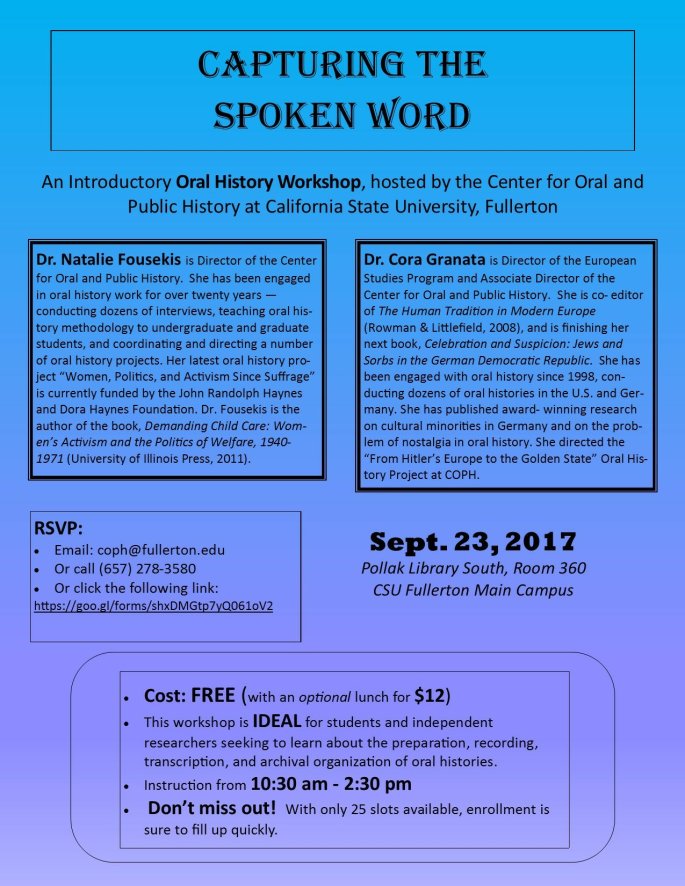
Capturing the Spoken Word

The Lawrence de Graaf Center for Oral and Public History will be offering a fall workshop. RSVP today for this introductory oral history session at CSU, Fullerton.