The Earth Memory Compass

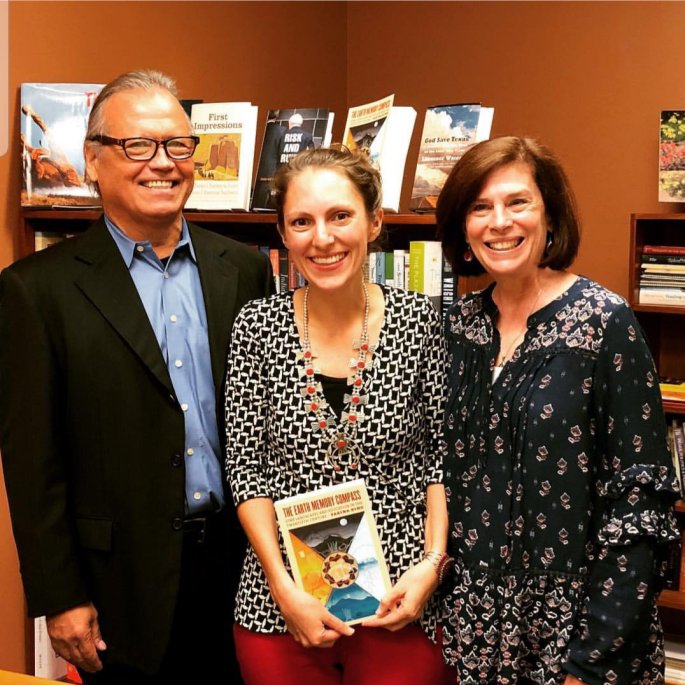
king.jpgCongratulations to Farina King, SOHA 2nd VP, for her recent book publication!

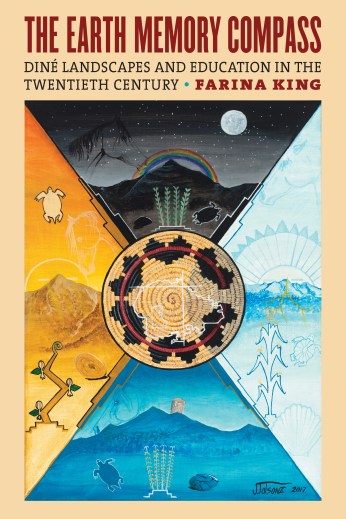
The Earth Memory Compass: Diné Landscapes and Education in the Twentieth Century

The Diné, or Navajo, have their own ways of knowing and being in the world, a cultural identity linked to their homelands through ancestral memory. The Earth Memory Compasstraces this tradition as it is imparted from generation to generation, and as it has been transformed, and often obscured, by modern modes of education. An autoethnography of sorts, the book follows Farina King’s search for her own Diné identity as she investigates the interconnections among Navajo students, their people, and Diné Bikéyah—or Navajo lands—across the twentieth century.

In her exploration of how historical changes in education have reshaped Diné identity and community, King draws on the insights of ethnohistory, cultural history, and Navajo language. At the center of her study is the Diné idea of the Four Directions, in which each of the cardinal directions takes its meaning from a sacred mountain and its accompanying element: East, for instance, is Sis Naajin (Blanca Peak) and white shell; West, Dook’o’oosłííd (San Francisco Peaks) and abalone; North, Dibé Nitsaa (Hesperus Peak) and black jet; South, Tsoodził (Mount Taylor) and turquoise. King elaborates on the meanings and teachings of the mountains and directions throughout her book to illuminate how Navajos have embedded memories in landmarks to serve as a compass for their people—a compass threatened by the dislocation and disconnection of Diné students from their land, communities, and Navajo ways of learning.

“Farina King’s study offers a passionate and thoughtful account of how the Diné, by holding on to their sacred ways of knowing and living, have withstood the long ordeal of educational colonialism. Beautifully written, bold in conception, and packed with intimate stories, this is a must-read for those interested in how indigenous peoples might maintain or rediscover ancestral identities.”

—David W. Adams, author of Education for Extinction: American Indians and the Boarding School Experience, 1875–1928 and Three Roads to Magdalena: Coming of Age in a Southwest Borderland, 1890–1990

“In engaging and readable prose, Farina King has produced a compelling autoethnography wherein she introduces readers to the concept of the Earth Memory Compass in order to get academics and laypeople alike to rethink the history of twentieth-century Diné educational experiences. In the process, she helps readers think about land, knowledge, and collective identity creation in ways that will help subsequent generations of scholars forge new work.”

—Erika Bsumek, author of Indian-Made: Navajo Culture in the Marketplace, 1868–1940

Critical to this story is how inextricably Indigenous education and experience is intertwined with American dynamics of power and history. As environmental catastrophes and struggles over resources sever the connections among peoplehood, land, and water, Kings book holds out hope that the teachings, guidance, and knowledge of an earth memory compass still have the power to bring the people and the earth together.

Published in Cooperation with the William P. Clements Center for Southwest Studies, Southern Methodist University
About the Author

Farina King is assistant professor of history and affiliate of the Cherokee and Indigenous Studies Department at Northeastern State University, Tahlequah, Oklahoma.

Information provided by: https://kansaspress.ku.edu/978-0-7006-2691-5.html
OHA 2019

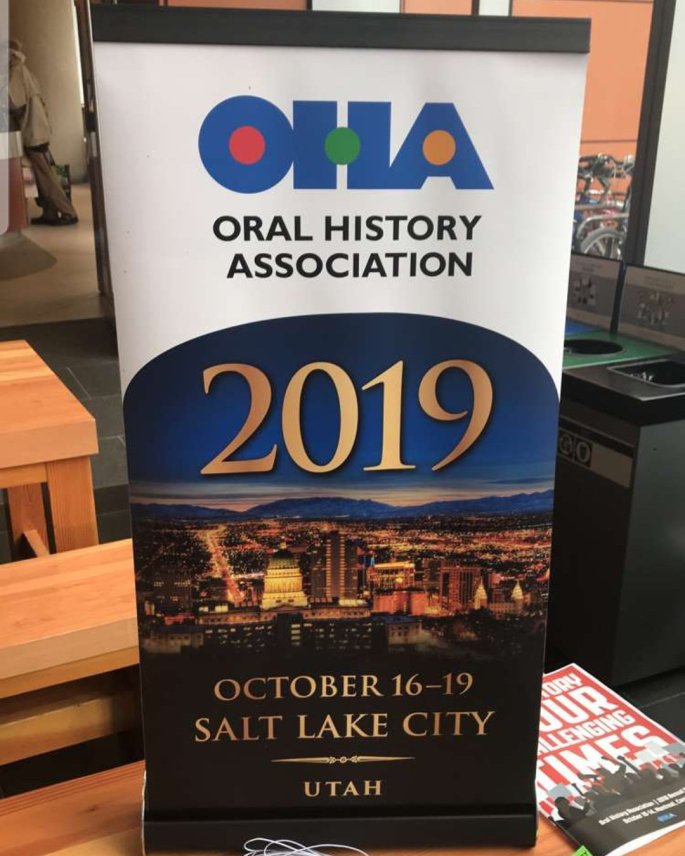
Calling all Southwest members to attend the @ohassociation meeting in Salt Lake City, Utah October 16-19, 2019! Enjoy Canada at the 2018 meeting!

#oralhistory #southwest #historians #historian #history #folklore #narrative #story #storytellers #2019

I’m Not Gonna Die in This Damn Place

Congratulations to Juan Coronado, SOHA Co-President, for his recent book publication! His book, I’m Not Gonna Die in This Damn Place: Manliness, Identity, and Survival of the Mexican American Vietnam Prisoners of War (Latinos in the United States), was officially published by Michigan State University in March 2018. Learn more about the book and order your copy at http://msupress.org/books/book/?id=50-1D0446B#.WwSzKO4vzIV.

Check out the positive review of the book in Publishers Weekly. Others have also praised his work that features oral histories of Mexican American POWs and Chicano Vietnam War experiences and stories:

From the start, and by design, the story of America’s Vietnam prisoners of war was disciplined into an official version. By focusing attention on the Mexican American Vietnam POWs, Juan David Coronado not only identifies how their shared cultural heritage affected their lives before, during, and after captivity, but also shows us just how diverse even a small group of prisoners could actually be. A welcome contribution to our understanding of American POW history. –Craig Howes, Director, Center for Biographical Research, University of Hawaiʻi at Mānoa, and author, Voices of the Vietnam POWs: Witnesses to Their Fight

Juan David Coronado has written a superb and important examination of Chicano prisoners of war in Vietnam; the firstaccount experiences reflected in the work add to this enlightening academic read.

–Charley Trujillo, author of Dogs from Illusion, American Book Award winner for Soldados, and codirector of the companion document

BOOK INFORMATION:

Michigan State University Press Paperback

$29.95 USD ISBN: 9781611862720

eBook$23.95 USD

ISBN: 9781609175542


OHA Flashback Friday

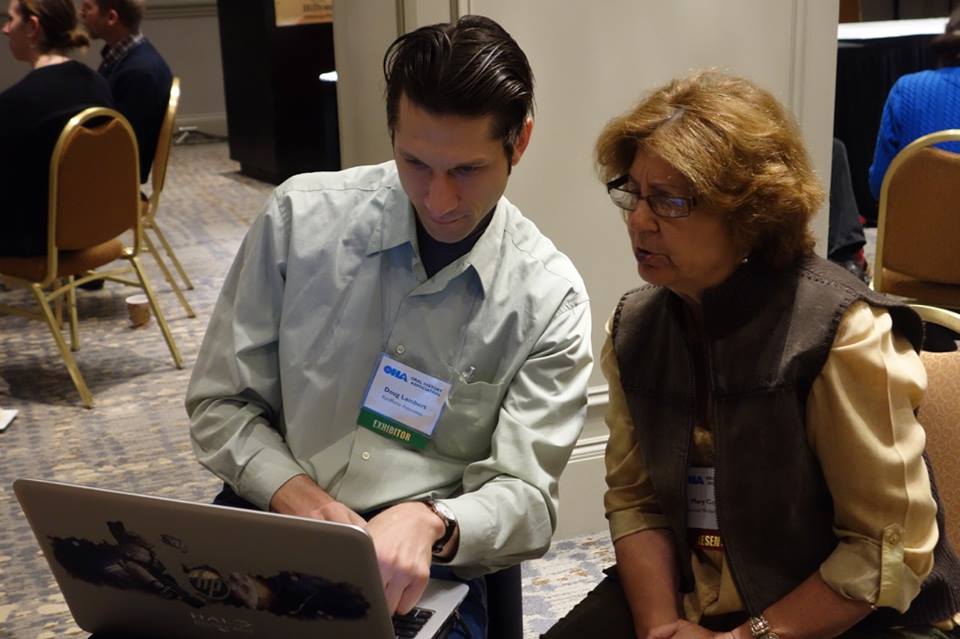
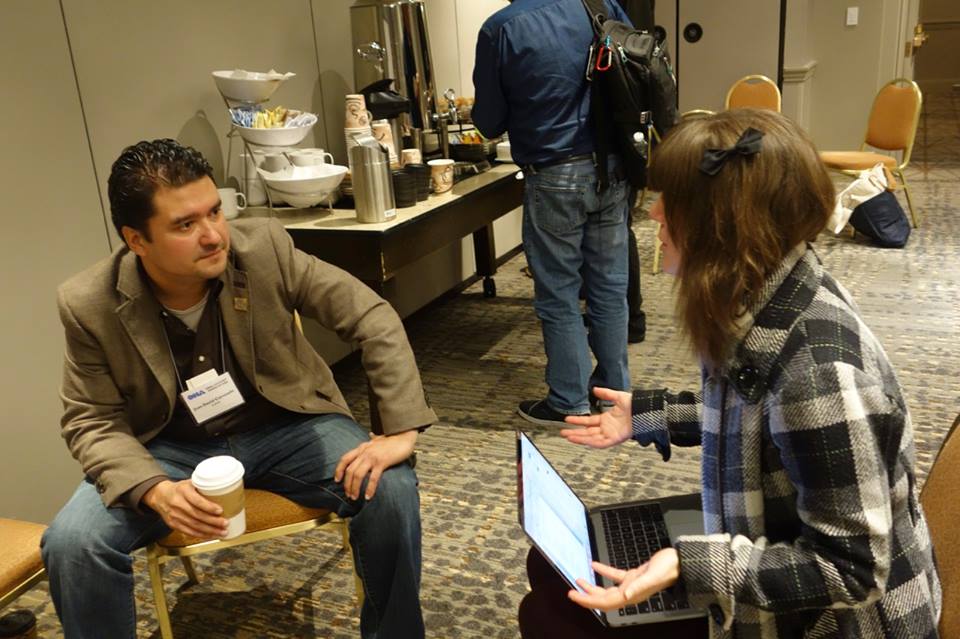
This Flackback Friday is from the 2017 Oral History Association meeting in Minnesota. Join the Oral History Association from October 10-14, 2018 at Concordia University in Montreal, Quebec, Canada. Registration is open for the conference. Click here for more information.

Generatively Humane: Inclusive Approaches to Undocumented Experiences and Histories

Event Details

Register / RSVP

Visit http://illuminations.uci.edu/events/2018_10_5_Generatively_Humane.html for more details.

1888 Center Chapters Podcast

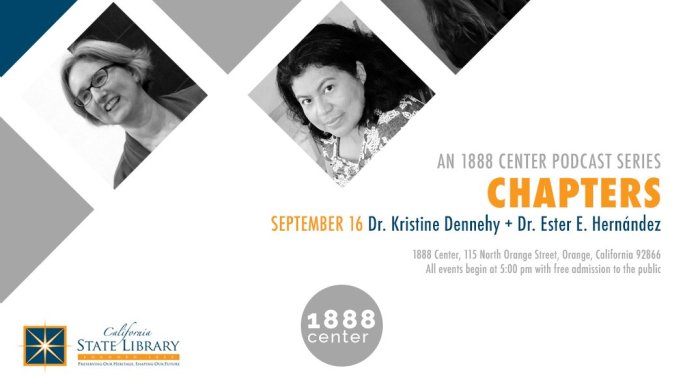
1888 Center CHAPTERS: Dr. Kristine Dennehy + Dr. Ester E. Hernández September 16, 5:00

Dr. Kristine Dennehy is a history professor at California State University Fullerton, with a specialization in Japanese and Korean history. A Connecticut native, Dr. Dennehy majored in Japanese language at Georgetown University, completed her M.A. in Asian Studies at Sophia University in Tokyo, and received her Ph.D. in history at UCLA (2002) with a dissertation entitled “Memories of Colonial Korea in Postwar Japan.” In 2008-09, Dr. Dennehy served Historical Adviser for an oral history project interviewing over 80 Japanese-American veterans who had served in the Military Intelligence Service during the Allied Occupation of Japan (1945-1952) as interpreters and translators. She is a lifetime member of the Orange County Historical Society and the Fullerton Sister City Association and regularly presents her work to local and international audiences, including the Fullerton Public Library Town & Gown Series and the Asian Association of World Historians.

Dr. Ester E. Hernández earned her Ph.D. in Social Science at UC Irvine and is a professor Chicana/o Latina/o Studies at CalStateLA. She has published on Salvadoran migration and remittances in social science journals such as the Journal of American Ethnic History and Economy & Society. She received a Rockefeller Humanities Fellowship, 2003-2004, CSULA on the theme of “Families and Belonging in the Multi-ethnic Metropolis.” Born in El Salvador, she serves on the board of directors of the Coalition for Humane Immigrant Rights of Los Angeles (CHIRLA) and is the co-editor of the anthology U.S. Central Americans: Reconstructing Memories, Struggles and Communities of Resistance (University of Arizona Press) about 1.5 and second generation Centroamericanas/os and U.S. Central Americans. Her current research is linked to immigrant rights, economic development and cultures of memory among children of immigrants.

SEPTEMBER 16
All events begin at 5:00 pm with free admission to the public
1888 Center, 115 North Orange Street, Orange, California 92866


RSVP FOR EVENT

CHAPTERS is a five-part 1888 Center Podcast series dedicated to stories surrounding the exclusion, forced removal, and internment of Japanese-Americans. The program also parallels a narrative thread through Deferred Action for Childhood Arrivals (DACA).

CHAPTERS is supported by the California Civil Liberties Public Education Program administered by the California State Library.

Korean Diaspora Colloquium

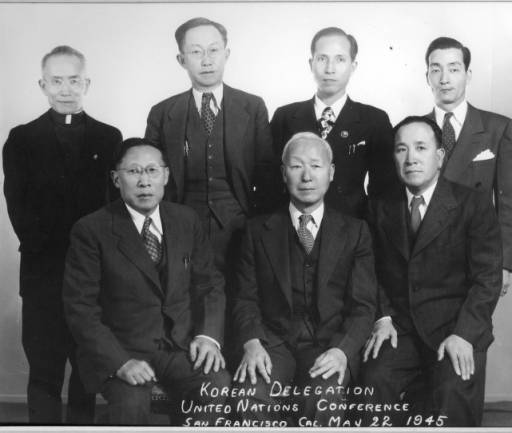
Korean Delegation to the United Nations Conference on International Organization, 1945. Photo courtesy of USC Libraries.

Family history can represent a transnational narrative. The Korean diaspora in a post-Japanese imperialist society pushed Mr. Song Hurn Joo to immigrate to Hawaii and eventually Los Angeles to pursue sovereignty for his country. Educated at Princeton University, these lessons and networks provided a bedrock for his lifetime career in politics. Dr. Syngman Rhee appointed him as the chairman of finance to issue bonds for the Korean government-in-exile. He educated Korea immigrants and helped unify organizations to establish the Korean National Association. Mr. Song served as the Korean National Association chairman for two terms, but was elected for three. Mr. Song’s commitment to his nation’s independence was the reason to honor his lasting memory at this year’s colloquium.

Consul General Wan-joong Kim greeting guests. Photo courtesy of the Korean Consulate’s office.
20180803_111719
Mr. Dong K. Kim, Jennifer Keil, and Dr. Cora Granata

Dr. Dennehy, CSUF History Department Chair, Dr. Granata, COPH Director, and Jennifer Keil, CSUF MA graduate, gathered at the Korean Consul General’s Residence in Los Angeles for the second annual Korean Diaspora Colloquium on July 31, 2018. This evening was opened by Dr. Shiyoung Park, Education Consul, to welcome the group of community leaders, scholars, and friends. Consul General Wan-joong Kim provided congratulatory remarks for the commemorative program in his home. Jennifer Keil, SOHA 1st VP, provided the keynote presentation on the life of Song Hurn Joo, a Seoul born Korean patriot who used his political connections to liberate his country from Japanese imperialism. Mr. Dong K. Kim concluded this evening with a memoir of his visionary grandfather which included personal memories. The Kim family provided archival materials and a written history that will be preserved for future scholars to analyze. We hope to create a robust oral history project that not only maintains Mr. Song Hurn Joo’s contributions, but other incredible patriots. Please contact Jennifer Keil at jennifer@70degrees.org if you’d like to contribute to this ongoing project. We hope to create a 2019 Southwest Oral History Association panel.

50th Anniversary of the Korean National Association, February 1959. Image courtesy of the Los Angeles Public Library. 

OHA Archives Interest Group

“Since 1966, the Oral History Association has served as the principal membership organization for people committed to the value of oral history. OHA engages with policy makers, educators, and others to help foster best practices and encourage support for oral history and oral historians. With an international membership, OHA serves a broad and diverse audience including teachers, students, community historians, archivists, librarians, and filmmakers.”

OHA has an Archives Interest Group that provides pragmatic approaches to storing analog and born-digital files. This group was established at the 2014 OHA annual meeting. Participate in the annual meeting on October 10-14, 2018 at Concordia University in Montreal, Quebec, Canada.

We recommend that you review the visual presentation created by Steven Sielaff at Baylor University.Video Preservation AIC Presentation_Page_01Video Preservation AIC Presentation

You can contact him directly at:

Steven Sielaff | Baylor University
Senior Editor & Collection Manager – Baylor University Institute for Oral History
One Bear Place, #97271
(312 Carroll Library)
Waco, TX 76798-7271
(254) 710-4644 – phone
www.baylor.edu/oralhistory

UNLV University Libraries

aae_about2

The African American Experience in Las Vegas

The UNLV University Library has an incredible project directed by SOHA’s Past President, Dr. Claytee White and managed by SOHA’s Secretary & Newsletter Editor, Barbara Tabash. African American Collaborative joined together because each believes in the importance of collecting, preserving, and making accessible the history of African Americans in Las Vegas.”

Their “website was launched in January 2014, the digital collection contained approximately 600 items. During subsequent grant periods, additional materials were added to bring the total to 4543 items. The multiple formats include text, images, and multimedia. Roughly 75 oral history interviews previously conducted by the UNLV Libraries’ Oral History Research Center are searchable via keywords or full text. Additional audio clips (52 mp3 files) complement the text, as well as photograph collections (398 total images) and a small selection of items from the manuscript collections (14 documents) that are relevant to the project’s focus. Each narrator (47 total) is represented in the collection with a biographical information record in the collection that joins related materials together in one place for easy user access. While some Partners shared materials for digitization that include items like the Jay Florian Mitchell Collection held by the Nevada State Museum and Historical Society (260 images), others shared information about their holdings and links to their collection websites.

In 2016 the UNLV University Libraries partnered with VegasPBS to complete the final phase of the project. With additional grant funding from the Institute of Museum and Library Services and The Commission for the Las Vegas Centennial, they produced the documentary, African Americans: the Las Vegas Experience. In addition, they created a curriculum guide to help K-12 teachers incorporate video clips and primary sources into classroom teaching and assignments.”


Visit http://digital.library.unlv.edu/aae for more project details.